
clinical research
Advancing Clinical Research in Transverse Tibial Transport

Surgical MIcrovascularization of Lower Extremities for Diabetic Foot Ulcers – Transverse Tibial Bone Transport Study
BioDynamik, Inc. is proud to sponsor the SMILE-TTT Study (Surgical Microvascularization of Lower Extremities for Diabetic Foot Ulcers – Transverse Tibial Transport), a prospective, randomized clinical study designed to further evaluate the use of Transverse Tibial Transport (TTT).
The SMILE-TTT Study represents an important milestone in the continued clinical investigation of TTT and reflects BioDynamik’s commitment to supporting high-quality scientific research and evidence generation. By utilizing a prospective, randomized study design, the trial is intended to provide robust clinical data that may further expand the understanding of TTT in the treatment of severe diabetic foot ulcers (DFUs).
Developed in collaboration with leading physicians and clinical investigators, the SMILE-TTT Study underscores BioDynamik’s dedication to advancing orthopedic innovation through rigorous clinical research. The study has been designed to evaluate predefined clinical and safety endpoints using a structured methodology that supports objective data collection and analysis.
why it matters
As the world’s first prospective, randomized clinical study evaluating Transverse Tibial Transport for severe diabetic foot ulcers, the SMILE-TTT Study represents a significant step toward strengthening the clinical evidence surrounding this innovative surgical technique.
BioDynamik remains committed to partnering with the orthopedic and podiatric communities to advance evidence-based medicine, support clinical excellence, and contribute to the future of limb reconstruction through meaningful scientific research.
study registration
SMILE - TTT
Surgical Microvascularization of Lower Extremities for Diabetic Foot Ulcers – Transverse Tibial Bone Transport Study
study details
Transverse Tibial Transport (TTT) in the Management of Chronic Diabetic Lower Extremity Wounds
nct number
A CLOSER LOOK
What is TTT?
The primary objective of this clinical study is to evaluate severe diabetic foot ulcer (DFU) healing rates following Transverse Tibial Transport (TTT) with the BioDynamik XT3 System
Transverse Tibial Transport (a technique used to grow bone) is a medical technique used to
encourage limb blood flow. It works by creating a bone segment via a surgical cut into the bone
(osteotomy) and gently pulling on the thin tissue covering the bone (called the periosteum). This tissue plays a key role in encouraging the blood flow to your feet and ankles.
Studies conducted outside of the United States using Transverse Tibial Transport show it can be a helpful treatment for difficult-to-heal diabetic foot ulcers, especially in patients who can’t handle more intensive surgeries. Research has found that creating this cut in the bone (osteotomy) and pulling on it (periosteal distraction) can speed up wound healing and improve blood flow in the limb. This method is called Tibial Cortex Transverse Transport (TTT) and has been shown to help save the limb (leg in this case) and heal ulcers.
This procedure is useful for patients who would otherwise be likely to require an amputation.
This minimally invasive procedure is being studied to determine whether it is safe and effective for treating diabetic foot ulcers (DFU). The safety and effectiveness of this procedure for treating diabetic foot ulcers is not yet known.
Mechanism of Action
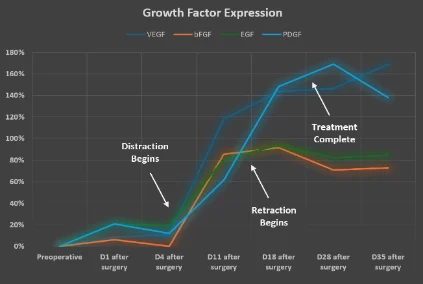
VEGF, IGF, EGF, and PDGF rise during distraction and stay elevated through retraction and recovery, extending the window for repair.
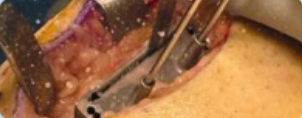
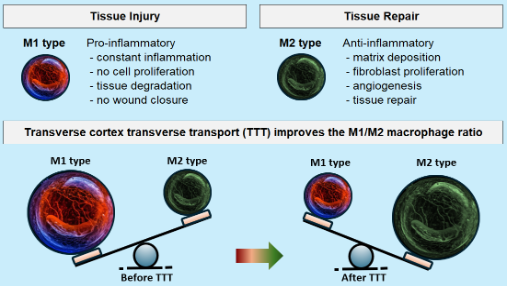
A small, surgically planned fracture in the tibia triggers the body’s healing cascade, forming a hematoma that activates immune cells and growth factors.
VEGF, IGF, EGF, and PDGF rise during distraction and stay elevated through retraction and recovery, extending the window for repair.
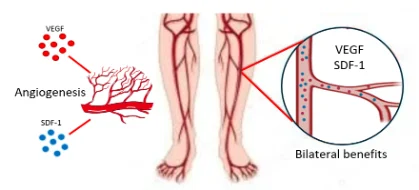
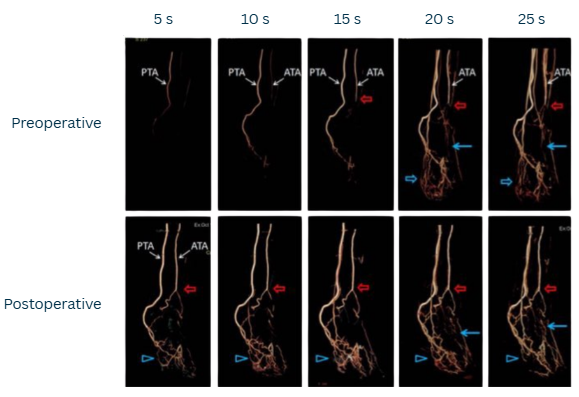
CTA Images reveal angiogenesis through newly grown blood vessels extending into peripheral tissues.
Chen Y, Kuang X, Zhou J, et al. Proximal tibial cortex transverse distraction facilitating healing and limb salvage in severe and recalcitrant diabetic foot ulcers. Clin Orthop Relat Res. 2020;478(4):836-851. doi:10.1097/CORR.0000000000001075
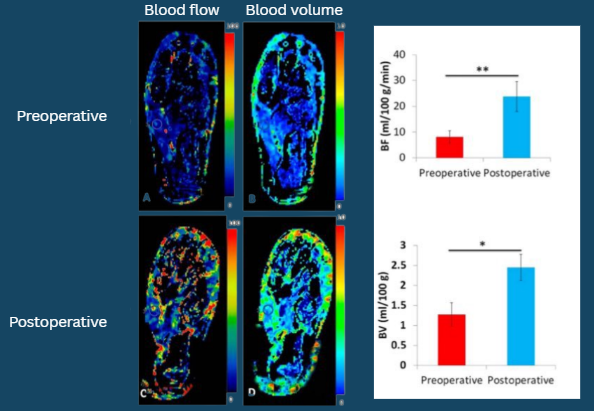
Increased perfusion results in greater blood volume and improved blood flow
Chen Y, Kuang X, Zhou J, et al. Proximal tibial cortex transverse distraction facilitating healing and limb salvage in severe and recalcitrant diabetic foot ulcers. Clin Orthop Relat Res. 2020;478(4):836-851. doi:10.1097/CORR.0000000000001075
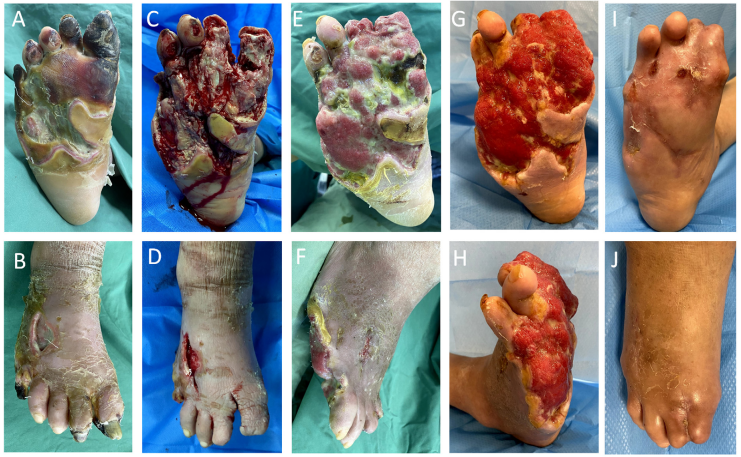
Results indicate accelerated healing, with 93% of patients healed by six months compared to 41% with conventional treatments
Chen Y, Ding X, Zhu Y, Jia Z, Qi Y, Chen M, et al. Effect of tibial cortex transverse transport in patients with recalcitrant diabetic foot ulcers: a prospective multicenter cohort study. J Orthop Translat. 2022;36:194-204. doi:10.1016/j.jot.2022.09.002
Questions about the study?
Reach out to our team to learn more about the SMILE-TTT Study or participation criteria.
